
The Mogedochi Creative Expression System is not about “good creatives.”
It’s about making something feel…
a little off,
a little real,
a little too human to ignore.
Because most ads today look:
- clean
- perfect
- symmetrical
…and completely forgettable.
A Few Reasons Why Expression Matters More Than Perfection
Let’s start with something simple.
People don’t connect with:
- perfect smiles
- perfect lighting
- perfect poses
They connect with:
- hesitation
- confusion
- attitude
- emotion
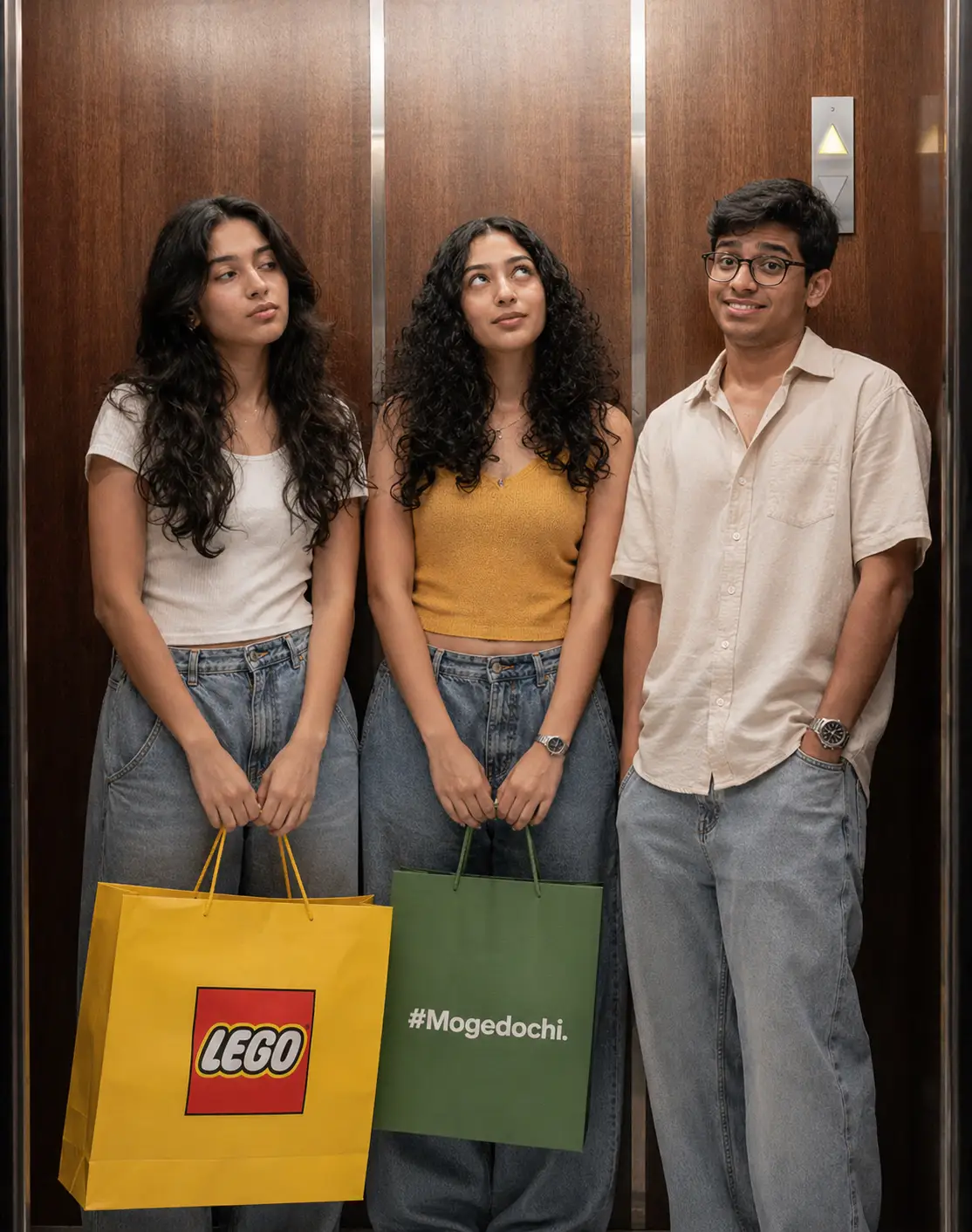
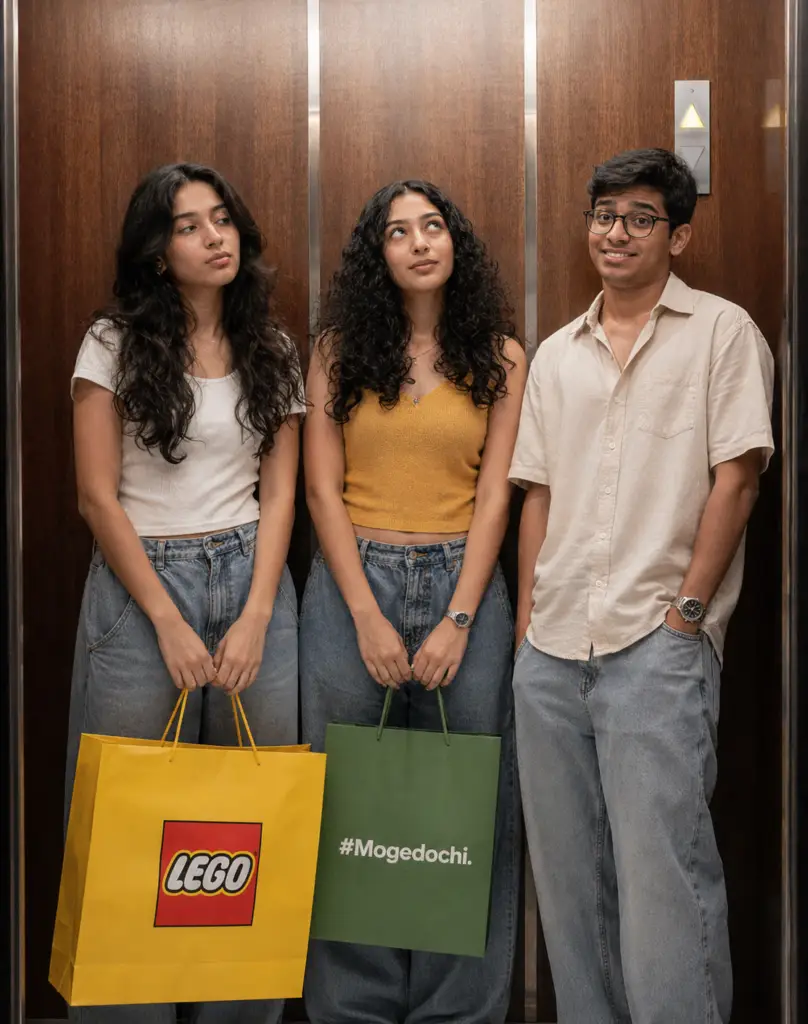
As in image 1 (the elevator shot with LEGO & Mogedochi bags),
look at the expressions:
- one person slightly disinterested
- one looking up thinking
- one awkward smile
Nothing is “perfect.”
And that’s exactly why it works.
It feels real.
Not staged.
Pinterest has 100s of good examples.. do your visual tastemaxing from there
start from this : https://in.pinterest.com/pin/560135272423695160/
https://in.pinterest.com/pin/527695281364153003/
Focal Length Changes How You Feel a Frame
Most brands don’t even think about this.
We do.
The Mogedochi Creative Expression System uses:
- 85mm lens feel → intimacy, natural, editorial
- 0.6 wide feel → slightly distorted, cool, out of place, almost 3D
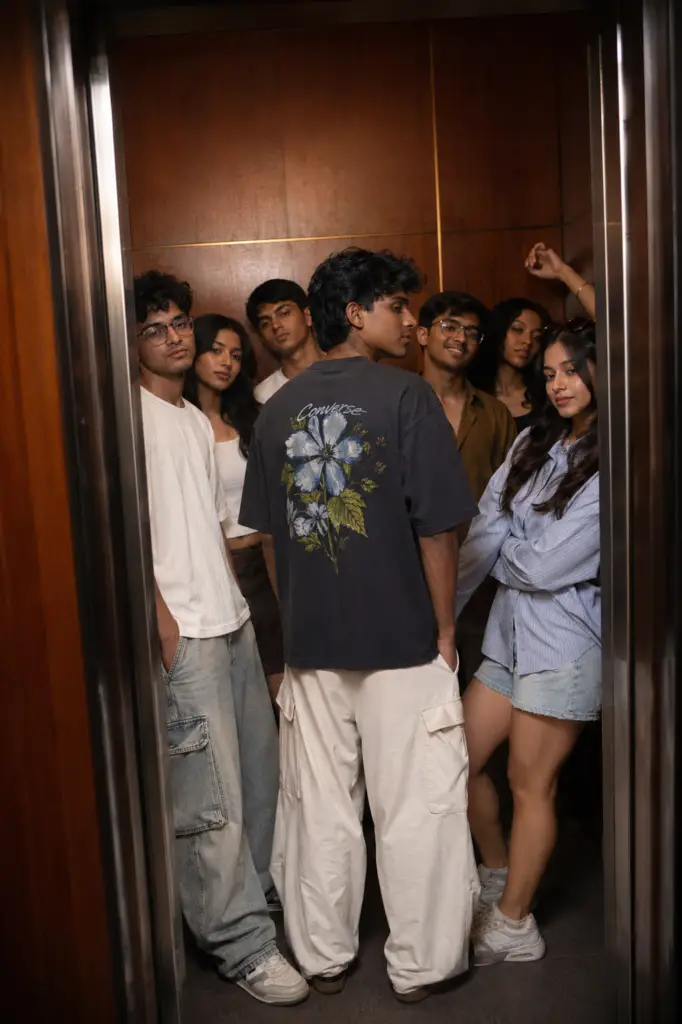
Look at the attached image above (group inside the lift).
That slightly compressed space + perspective makes it feel:
- crowded
- intense
- intentional
Now compare that to a flat 50mm social media shoot…
You’ll feel the difference instantly.
Imperfection Is the Hidden Layer
If everything is perfect:
- hair
- lighting
- pose
It becomes fake.
So we break one thing.
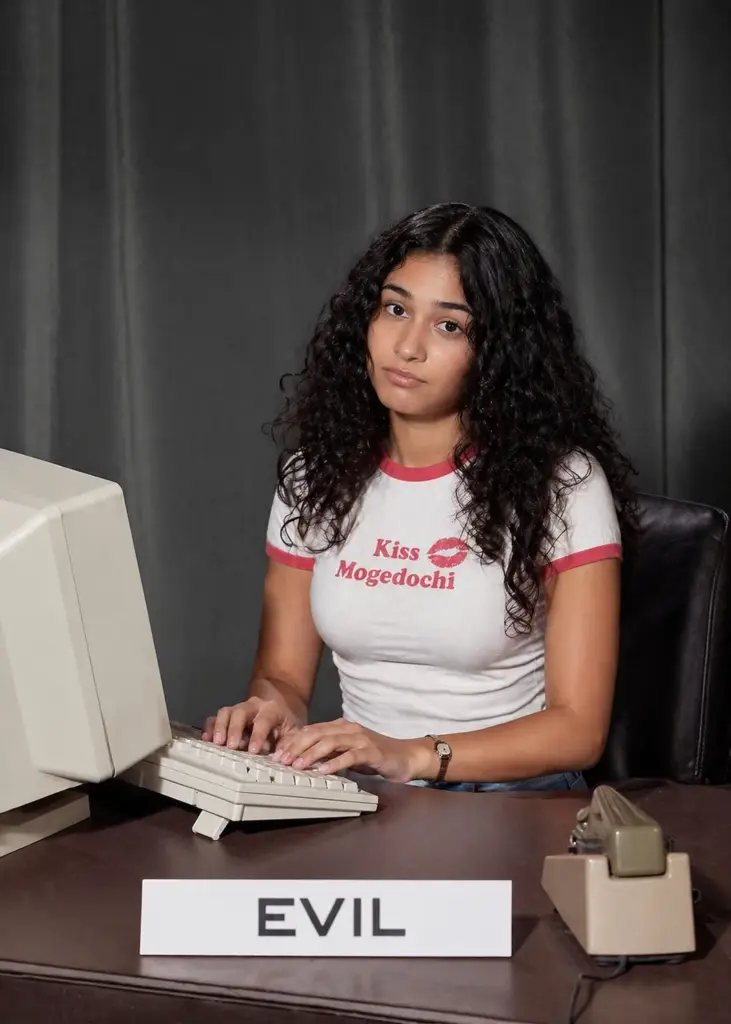
As in the “evil desk” image above:
- expression is slightly off
- posture is stiff
- vibe is intentionally uncomfortable
That discomfort creates attention.
Color Is Not Decoration — It’s Positioning


Look at the green Mogedochi setup (matcha + newspaper frame).
That is not just aesthetic.
That is:
- identity
- recall
- consistency
Green here is not just color.
It becomes:
- mood
- environment
- personality
Same with the Yellow LEGO bag vs green Mogedochi bag contrast.
It creates:
- tension
- contrast
- visual storytelling
Editorial Thinking in Everyday Content
Most of what you see in:
- luxury campaigns
- multi-million ads
- high-end cinematography
Relies on these same principles:
- expression
- framing
- imperfection
- color psychology
The difference?
They spend crores.
We apply it to:
- social media
- campaigns
- content systems
So what was once premium…
Becomes our basic.
The “Out of Place” Effect
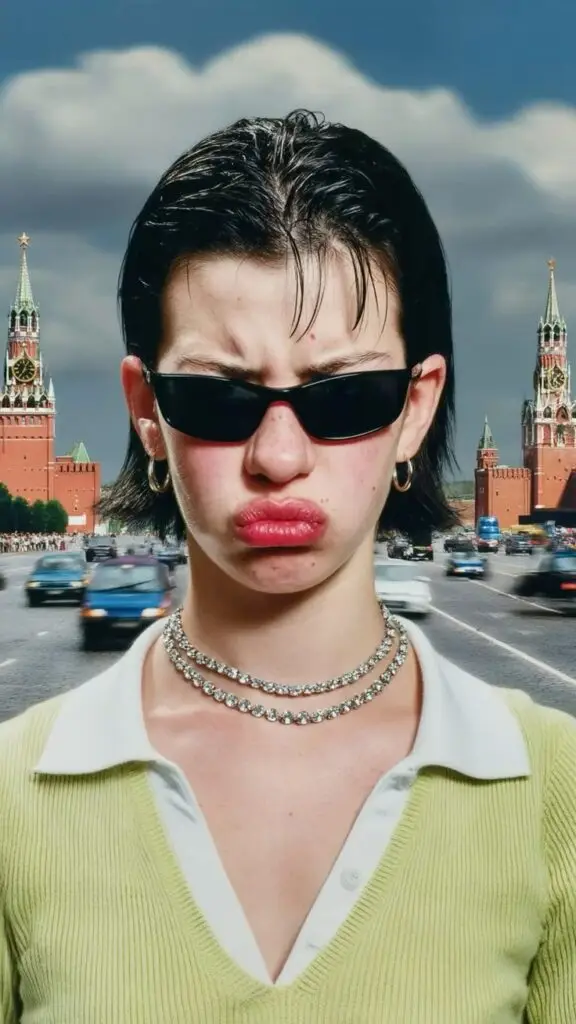
Look at the weird lip expression image.
That face is not “normal.”
But it makes you stop.
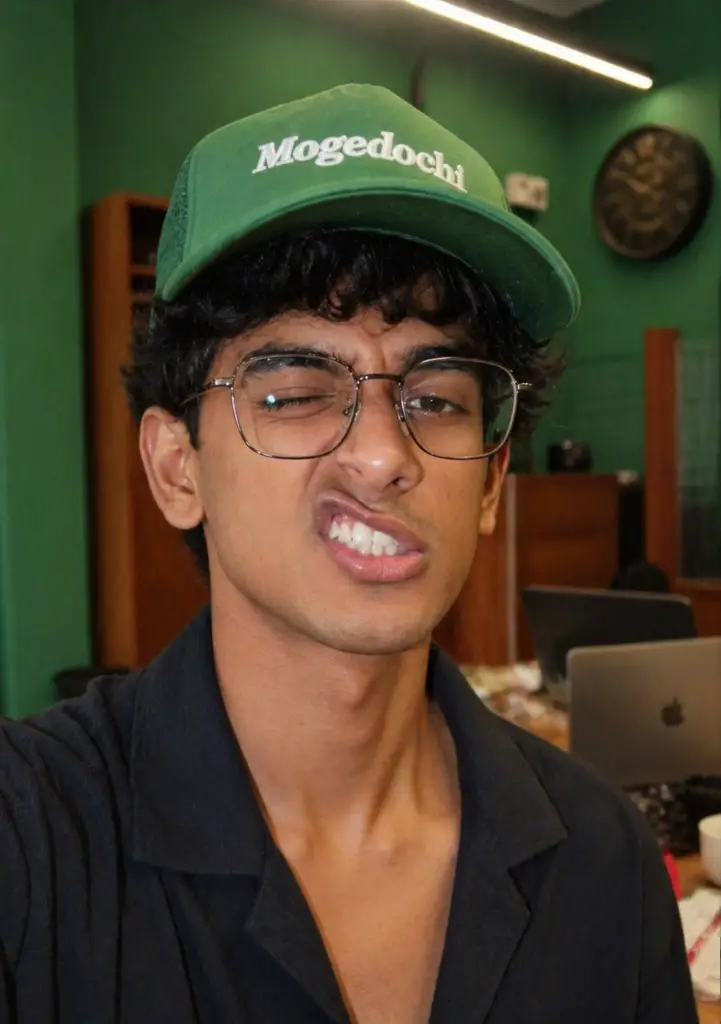
Same with:
- the green cap close-up
- slightly aggressive framing
- non-symmetric face positioning
This creates:
disruption in scroll behavior
And disruption = attention.
Why Flat Content Fails
Flat content looks like:
- everyone smiling
- centered subject
- perfect symmetry
It feels:
- safe
- expected
- ignored
The Mogedochi Creative Expression System avoids that by:
- shifting perspective
- breaking balance
- adding emotional friction
This Is Not Just Photography
This applies to:
- ads
- landing pages
- brand campaigns
- video direction
- storytelling
- Social Media
It’s not just visuals.
It’s a lot more.. Cant think of a word.
We Know More Than We Show
These examples?
They’re just a few.
In reality, we work with:
- 50+ micro decisions
- 100+ creative settings
- layered adjustments
Things like:
- eye direction
- micro posture
- framing tension
- subject imbalance
- emotional tone
And honestly…
We can’t reveal everything here.
Because:
we know what we know
From Random to Editorial
A bad composition is not “bad.”
It’s just:
- unrefined
With the right adjustments:
It becomes:
- intentional
- editorial
- premium
That’s the shift.
Final Thought
People don’t stop scrolling because your ad is clean.
They stop because something feels:
- different
- real
- slightly uncomfortable
The Mogedochi Creative Expression System is built on that edge.
Not perfection.
But controlled imperfection.