
The Product Was Already Expensive. The Brand Didn’t Feel Like It.
Some products become difficult to market for a strange reason.
The quality is real.
The engineering is strong.
The pricing is justified.
But the perception around the product still feels uncertain.
That was the tension around Oxykraft.
The systems were premium.
The sound experience was powerful.
The setups belonged inside luxury spaces.
Yet the visual identity around the brand felt closer to what people associate with:
- gaming stores
- electronics pages
- technical catalogues
instead of cinematic living environments.
That disconnect matters more in audio than most categories.
Because sound is invisible.
Which means the user decides how premium it feels before hearing anything at all.
Most Audio Brands Accidentally Market Specifications Instead of Experience
A lot of speaker brands fall into the same trap.
They start communicating through:
- wattage
- features
- technical layouts
- comparison-heavy creatives
The assumption is logical:
“If the product is good, explain why.”
But premium audio rarely sells through explanation.
It sells through atmosphere.
People are not imagining frequencies.
They are imagining:
- movie nights
- architectural spaces
- stillness
- immersion
- status
- emotional escape
The product becomes desirable when the room starts feeling cinematic before the speaker is even noticed.
That became the foundation of the Oxykraft shift.
The Earlier Visual System Was Fighting the Product
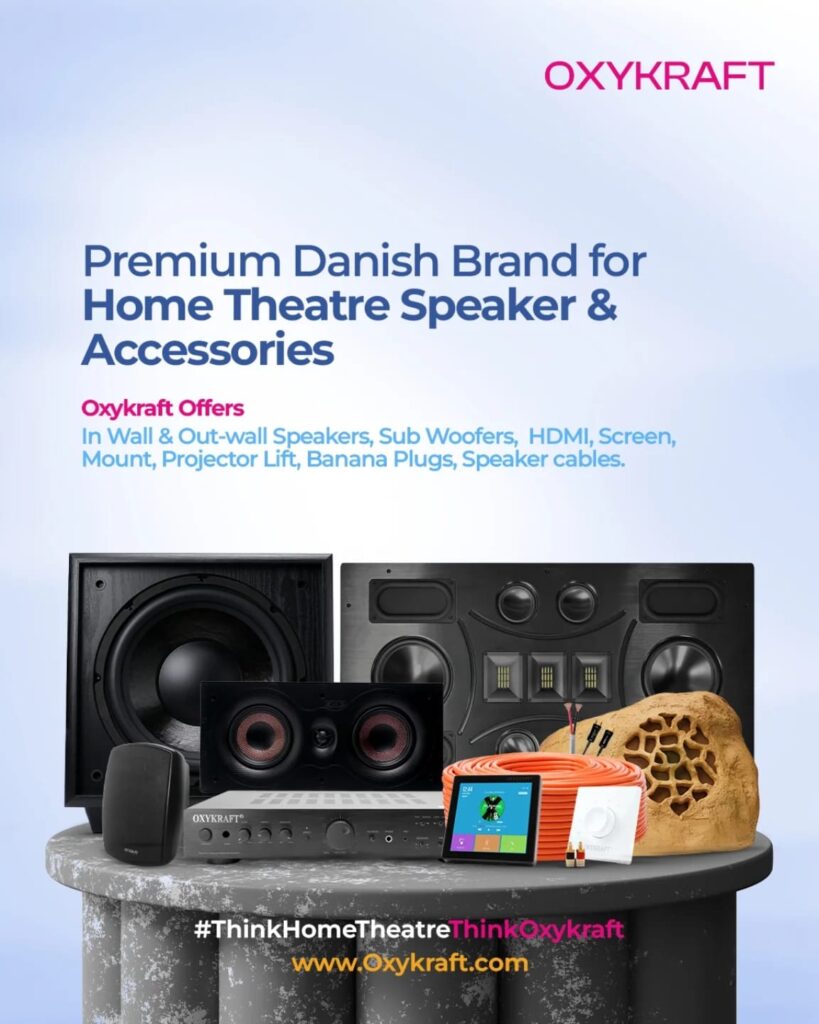
The older direction used many common electronics-brand signals:
- RGB-heavy visuals
- cluttered layouts
- aggressive spec communication
- glossy gradients
- serif typography mixed inconsistently
- showroom graphics that looked promotional instead of intentional
Nothing was completely wrong individually.
But together, the brand started feeling louder than the product itself.
That weakens premium perception very quickly.
Especially for a Danish-origin audio system where restraint should have been the advantage.
The Shift Was Towards Controlled Power
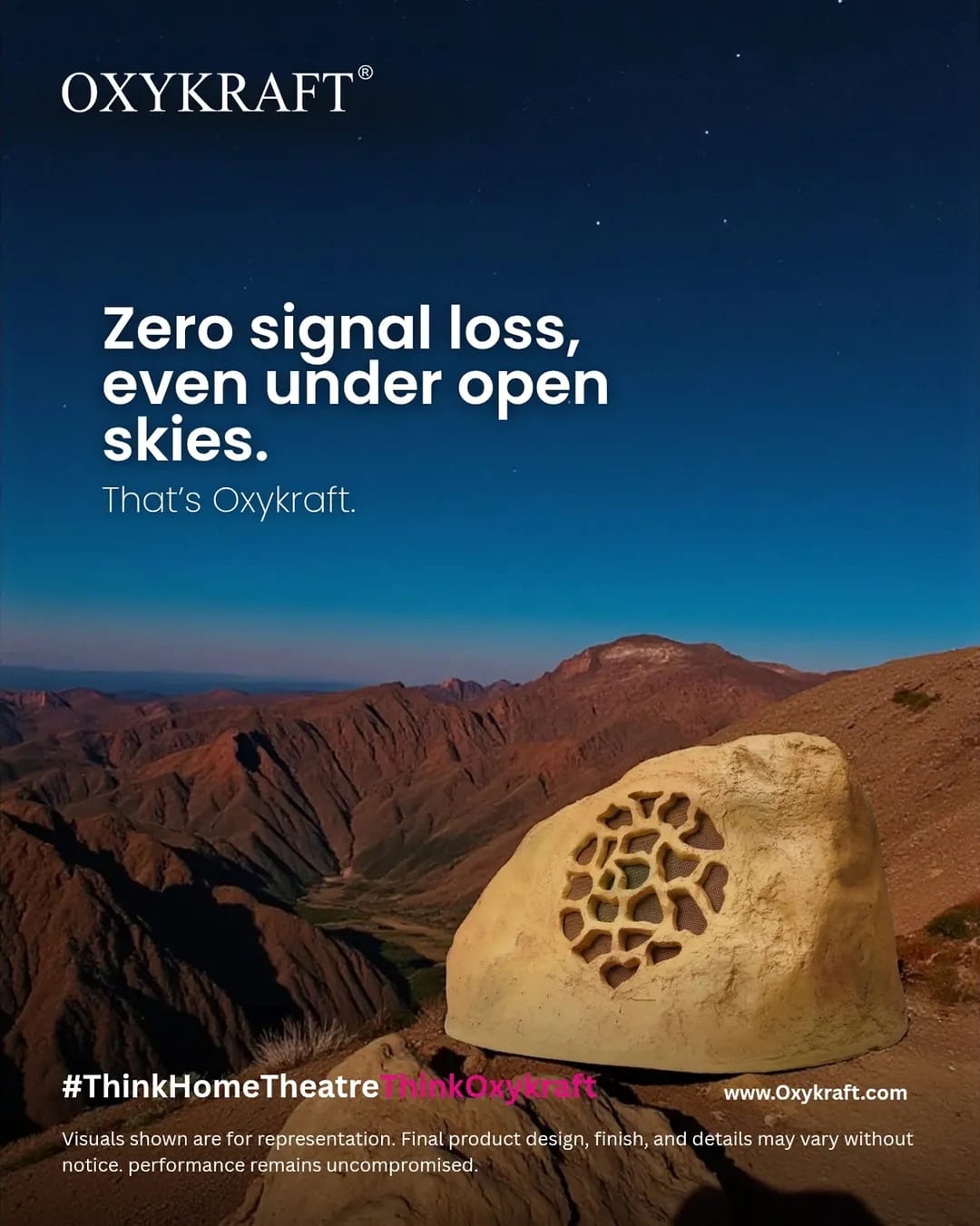
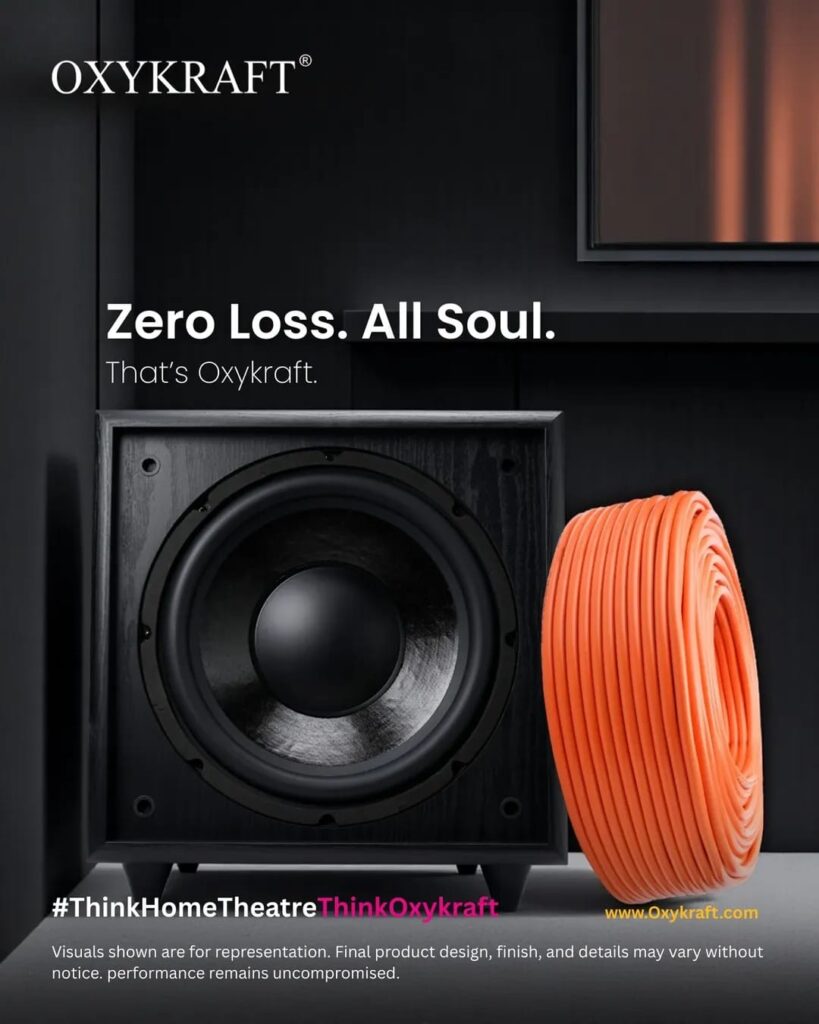
The visual direction changed from “tech marketing” to cinematic environmental storytelling.
The references moved closer to brands like:
- Marshall
- Bang & Olufsen
Not copied visually.
But studied structurally.
Those brands understand something important:
Premium audio should feel spatial.
Not crowded.
What Changed Visually
The newer system focused on:
- darker compositions
- controlled contrast
- architectural framing
- cinematic lighting
- immersive room tone
- intentional silence inside layouts
Instead of trying to show everything, the creatives began hiding more.
That increased curiosity.
The speaker stopped behaving like inventory.
It started behaving like an object inside a world.
Why Cinematic Framing Matters in Home Theatre Branding
People do not buy home theatre systems the same way they buy electronics.
They buy imagined experiences.
The brain starts simulating:
- how the room would feel
- how films would sound
- how guests would react
- how the space reflects identity
That means visual framing affects perceived sound quality more than most marketers realize.
A flat product shot reduces emotional anticipation.
A cinematic environment increases it.
Even before interaction begins.
One Small Change That Shifted Perception
Earlier creatives often tried to “show the setup clearly.”
But clarity was reducing intrigue.
The newer direction used:
- deeper shadows
- partial reflections
- off-center framing
- environmental tension
- negative space
The product no longer screamed for attention.
It controlled the room quietly.
That subtle change dramatically improved how premium the systems felt.
The Website Was Also Rebuilt Around Feeling
The earlier site structure behaved more like a technical electronics catalogue.
Heavy information.
Fragmented visuals.
Too much explaining too early.
The newer direction focused on:
- immersion before information
- emotional pacing
- cleaner navigation
- stronger environmental storytelling
- visual breathing space
The user experience started feeling closer to entering a luxury showroom than browsing specs online.
That distinction matters.
Because expensive products lose value perception when they explain themselves too aggressively.
Home Theatre Branding Is Really About Environmental Identity
This is where many B2B and luxury setup brands miscalculate their audience.
People are not only buying speakers.
They are buying:
- room identity
- architectural status
- sensory control
- emotional escape
Which means the brand has to communicate more than product quality.
It has to communicate taste.
That became central to the Oxykraft positioning.
The Performance Shift Was Visible Beyond Metrics
The improvements were not only visible inside campaigns.
The offline perception changed too.
- better showroom response
- stronger premium inquiries
- higher intent conversations
- improved audience quality
- more time spent exploring setups
- better engagement on immersive content
The audience behavior became calmer.
Less price-led.
More experience-led.
That is usually the signal that perception has matured.
A Detail Most Teams Ignore
One interesting thing about luxury audio:
Shadows matter.
Cheap audio brands often over-light products because they are afraid users will “miss details.”
Premium brands do the opposite.
They let parts disappear.
Because mystery creates perceived depth.
That principle influenced:
- lighting
- rendering
- camera positioning
- showroom imagery
- website composition
throughout the Oxykraft system.
The Brand Stopped Behaving Like Electronics Retail
That was the real transformation.
The brand no longer felt like:
“a place that sells speakers.”
It started feeling like:
“a company that understands immersive living.”
That difference changes how users justify price psychologically.
A Quiet Observation
The strongest luxury brands usually reduce noise instead of increasing it.
Oxykraft became more premium not when more elements were added…
but when unnecessary signals were removed.