
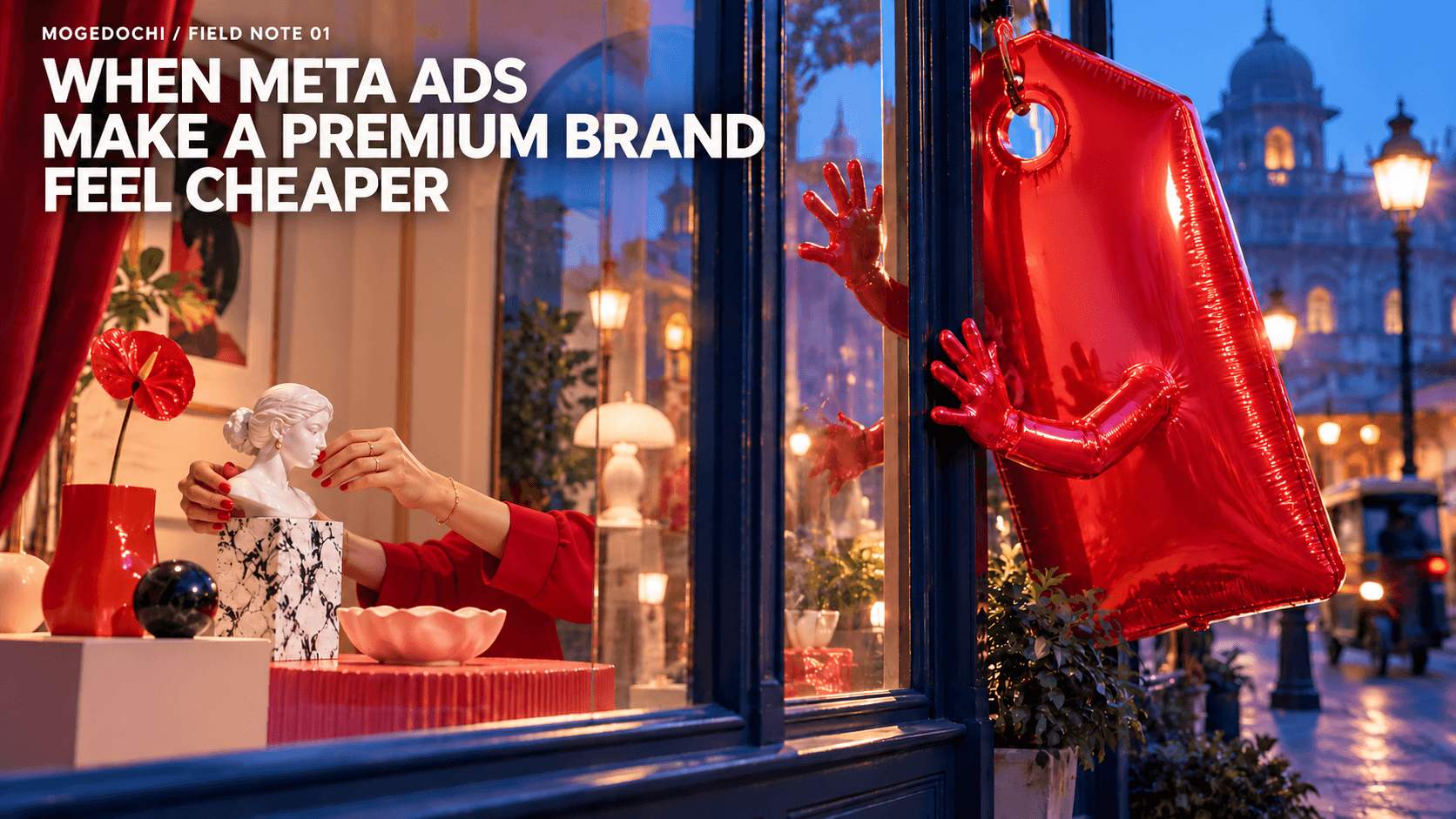
Meta Ads Brand Perception is rarely damaged by one bad creative. A founder approves a new Meta creative at 11:47 pm because the old one is “not converting anymore.”
The new version is clearer. Bigger product. Bigger offer. A price that can be understood without sound. A familiar countdown device in the corner. By Monday, the cost per lead looks healthier. The media buyer is relieved. The sales team has something warmer to call.
Then a person lands on the website expecting the brand they saw on Instagram and finds a different one. The ad was insistent. The landing page is trying to be composed. The WhatsApp reply is a pasted catalogue and a question about budget.
Nothing in that sequence is obviously wrong. That is why it happens so often.
Meta Ads Brand Perception Has a Visual Accent
Premium is not a font choice or an empty margin. It is the feeling that the brand knows what it is doing, including when it wants your money. Once a brand repeatedly uses urgency it cannot carry through the rest of the experience, it starts borrowing the language of a category it may not want to belong to.
The tell is rarely one bad ad. It is the accumulation: “limited slots” on every creative, a premium service framed like a flash sale, an ad that says custom and a form that begins with a budget dropdown before it asks what someone needs. The brand still looks expensive. It simply feels impatient. That is the quiet problem with Meta Ads Brand Perception: the ad can win the click while the brand loses the room.
Meta rewards a clear response. A human does not experience a brand as a collection of separate assets. They carry the atmosphere of the ad into the page, the page into the inquiry, and the inquiry into the decision to pay. When those moments do not agree, the cheaper feeling is not caused by price. It is caused by doubt.
What Meta Ads Brand Perception Needs After the Click
Some founders hear this and decide their advertising should become quieter. That is not the answer. An ad can be direct, specific and commercially serious without making a premium brand sound cornered. The question is whether the ad is making a promise the next surface can continue.
If the creative says “a home designed around how you live,” the landing page needs evidence of process, material judgement and how to begin. If the creative says “book a consultation,” the reply should not sound like a reseller has picked up the phone. If the campaign is running a date-led offer, it should be an actual event in the business, not a visual habit imported from a lower-funnel template.
A recent social moment shows the difference between relevance and panic
Vaseline India’s temporary switch to “Basseline” on social media is useful here, precisely because it was not a permanent rebrand. The brand joined a creator-led meme, initially with no product message or paid support, then acknowledged the people who had made the joke travel. According to Hindustan Unilever’s account of the campaign, the first post passed 1.4 million organic views and the later #VaselineHijacked post passed 4.2 million.
The lesson is not “rename your brand when the internet says something funny.” It is that the brand did not begin by dragging a discount badge into the conversation. It recognised the existing cultural behaviour, made one readable gesture, and kept the product pressure low enough for the audience to feel seen rather than processed.
The landing page is where the ad has to grow up
A landing page should not repeat the ad in longer sentences. Strong Meta Ads Brand Perception carries one recognisable promise from the creative into the page. Its job is to make the click feel intelligent. For a premium Indian business, that often means showing the unglamorous proof: who the work is for, what the first conversation involves, how timelines are handled, what the customer receives, what the brand will not compromise on.
Before refreshing a high-spend Meta campaign, put the ad, landing page and first WhatsApp message beside each other. Remove the logos. Could one person tell they came from the same company? Do they carry the same degree of certainty? Is the ask proportionate to the trust earned?
For a grounded local comparison, read how Delhi NCR interior brands can feel more premium online. The point is not to make every campaign quieter. It is to make the promise recognisable after the click.
At Mogedochi, this is the part of creative intelligence we care about: not making a campaign look more premium in isolation, but watching where its promise survives contact with the next screen, the next person and the next pressure point. Growth is allowed to be urgent. It just should not make the brand forget how it wanted to be remembered.