
Every post tried to clarify something.
Why the product was premium.
Why the quality was better.
Why the pricing made sense.
Why the process mattered.
The intention was good.
But after a while, the brand stopped feeling confident.
Not because the product became weaker.
Because the communication started sounding like justification instead of certainty.
That shift is subtle.
But users feel it very quickly.
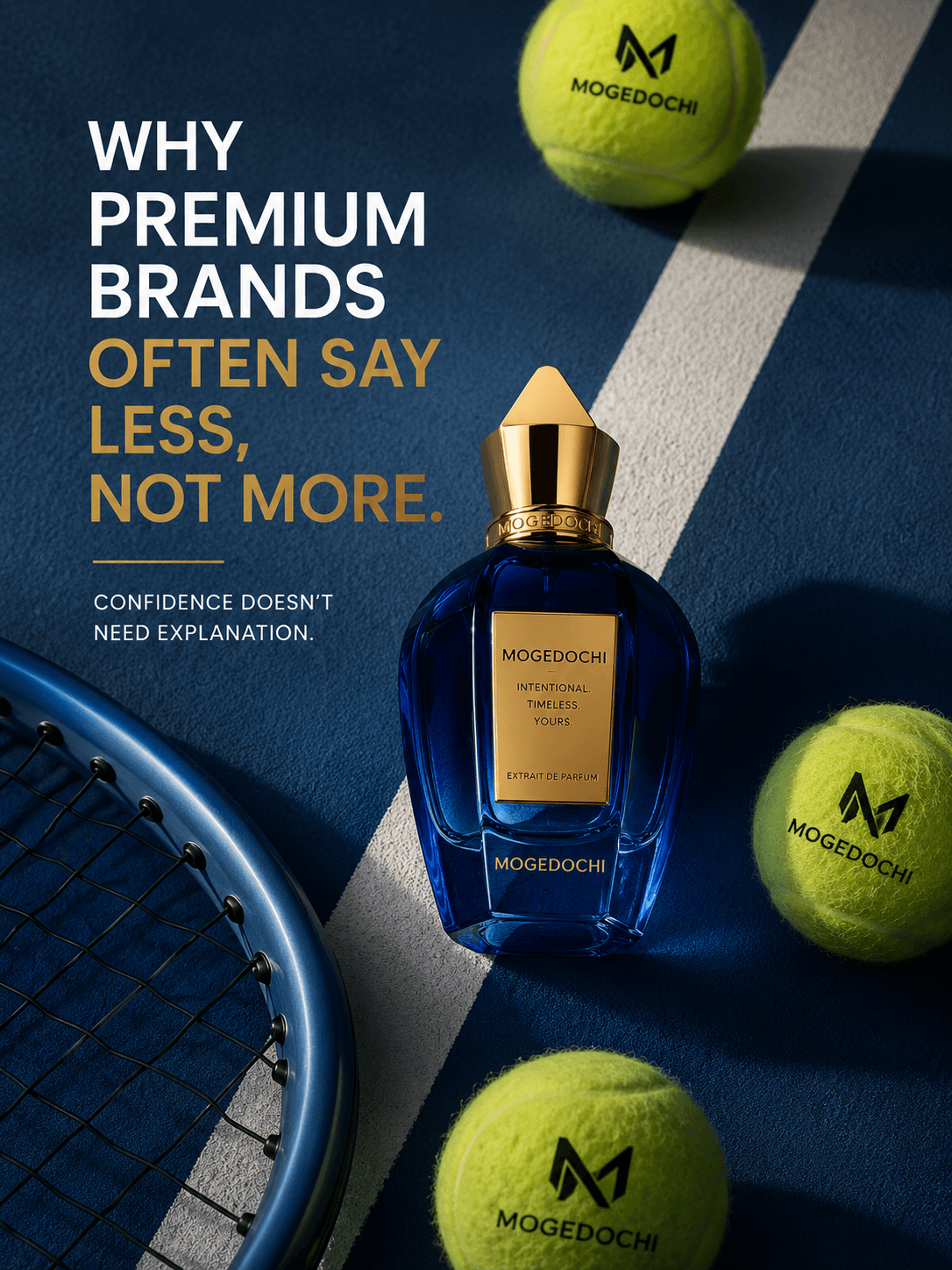
Why Premium Brands Often Say Less, Not More
Most brands assume trust comes from explanation.
So they keep adding:
- more copy
- more features
- more proof
- more detail
- more persuasion
The problem is that premium perception does not behave like a logical checklist.
It behaves more like emotional stability.
The audience is not only evaluating information.
They are evaluating confidence.
The User Notices Effort Faster Than Brands Realize
There is a moment where communication starts feeling strained.
The visuals become louder.
The captions become longer.
The messaging becomes heavier.
Everything begins trying too hard to prove value.
Ironically, that usually lowers perceived value instead of increasing it.
Because premium brands rarely feel anxious about being understood immediately.
They allow space.
That space becomes part of the perception itself.
Luxury Rarely Rushes the User
Think about the brands that feel expensive before price even appears.
Usually the experience feels restrained.
- slower pacing
- cleaner framing
- controlled typography
- selective information
- emotional precision
Nothing appears desperate for validation.
That emotional restraint creates psychological certainty — the kind of signal a luxury branding agency works to build deliberately across every brand touchpoint, not just individual campaigns.
And certainty is one of the strongest luxury signals in branding.
Luxury research and consumer behavior studies increasingly show that perceived exclusivity often comes from controlled experience rather than aggressive persuasion.
Why Over-Explaining Creates Friction
A user lands on a website.
Before understanding the product, they encounter:
- multiple banners
- excessive selling points
- repeated urgency
- crowded messaging
- aggressive reassurance
At first, this seems persuasive.
But cognitively, it creates pressure.
Pressure increases evaluation.
Evaluation slows emotional trust.
The user stops feeling guided and starts feeling sold to.
That transition quietly weakens perception.
The Difference Between Clarity and Overcompensation
Clear brands simplify interpretation.
Overcompensating brands overload interpretation.
That distinction matters more than aesthetics alone.
A visually beautiful campaign can still feel insecure if every element is demanding attention simultaneously.
Meanwhile, some premium campaigns barely explain themselves at all.
Yet the audience still feels:
- confidence
- control
- intentionality
- status
before fully processing the offer.
A Small Observation From Fashion and Jewellery Campaigns
Some editorial-style campaigns inspired by houses like Sabyasachi or Swarovski often rely less on aggressive persuasion and more on atmosphere.
The expression stays controlled.
The eye direction feels intentional.
The frame breathes.
Negative space remains untouched.
Even silence inside the composition communicates value.
That restraint is not accidental.
It shapes how the audience emotionally categorizes the brand before logic fully enters the decision.
Why Premium Brands Protect Their Emotional Shape
Brands that establish stronger perception systems early usually require less reactive communication later.
Many growing brands lose premium perception while trying to scale attention.
Every trend gets adopted.
Every format gets tested.
Every hook becomes louder.
The identity slowly starts stretching.
Premium brands tend to behave differently.
They protect emotional consistency more aggressively than reach spikes.
Because once the perception collapses into noise, rebuilding trust becomes expensive.
Smaller creative structures with tighter alignment are also becoming more common in modern campaign execution.
What Strong Brand Systems Usually Understand
The strongest creative systems are rarely optimizing individual posts in isolation.
They optimize interpretation.
Which means asking:
- how does the brand feel repeatedly?
- what emotional pressure does the audience experience?
- where does the confidence break?
- where does communication start sounding performative?
That layer is becoming more important as audiences grow more visually trained.
A recent internal discussion published by Mogedochi explored this idea through the lens of “perception pressure,” where reducing unnecessary explanation improved audience response more than increasing content volume.
The interesting part was not higher attention.
It was stronger emotional stability across touchpoints.
Creative agencies working on culture-first campaigns have also started prioritizing emotional consistency over content frequency.
Why Users Trust Calm Brands Faster
Calm communication reduces resistance.
Not passive communication.
Controlled communication.
There is a difference.
Users often associate:
- excessive urgency
- visual overcrowding
- forced luxury language
- constant persuasion
with instability rather than authority.
Meanwhile, emotionally stable brands create relief.
And relief is memorable.
A Contradiction Most Brands Miss
The more premium a brand wants to feel…
the less it can afford to look like it is asking for approval.
Why This Matters Beyond Luxury
This applies far beyond fashion or jewellery.
Interior brands.
Hospitality spaces.
Wellness companies.
Creative studios.
Any brand trying to create long-term perception — from a wellness company to a skincare brand design agency — eventually reaches the same problem: too much communication starts weakening emotional precision.
too much communication starts weakening emotional precision.
Not because information is bad.
Because modern audiences evaluate emotional coherence faster than detailed reasoning.
A Line Worth Keeping
Premium perception is often built through what the brand chooses not to say.
Closing Thought
The strongest brands rarely feel silent because they lack substance.
They feel controlled because the system underneath already knows what it is.
And when a brand becomes emotionally certain, the audience usually stops demanding constant explanation from it.
Especially when campaigns, visuals, websites, and communication are directed through one emotionally aligned system.